IRISH MOILED BREEDERS CELEBRATE MILESTONE ANNIVERSARY
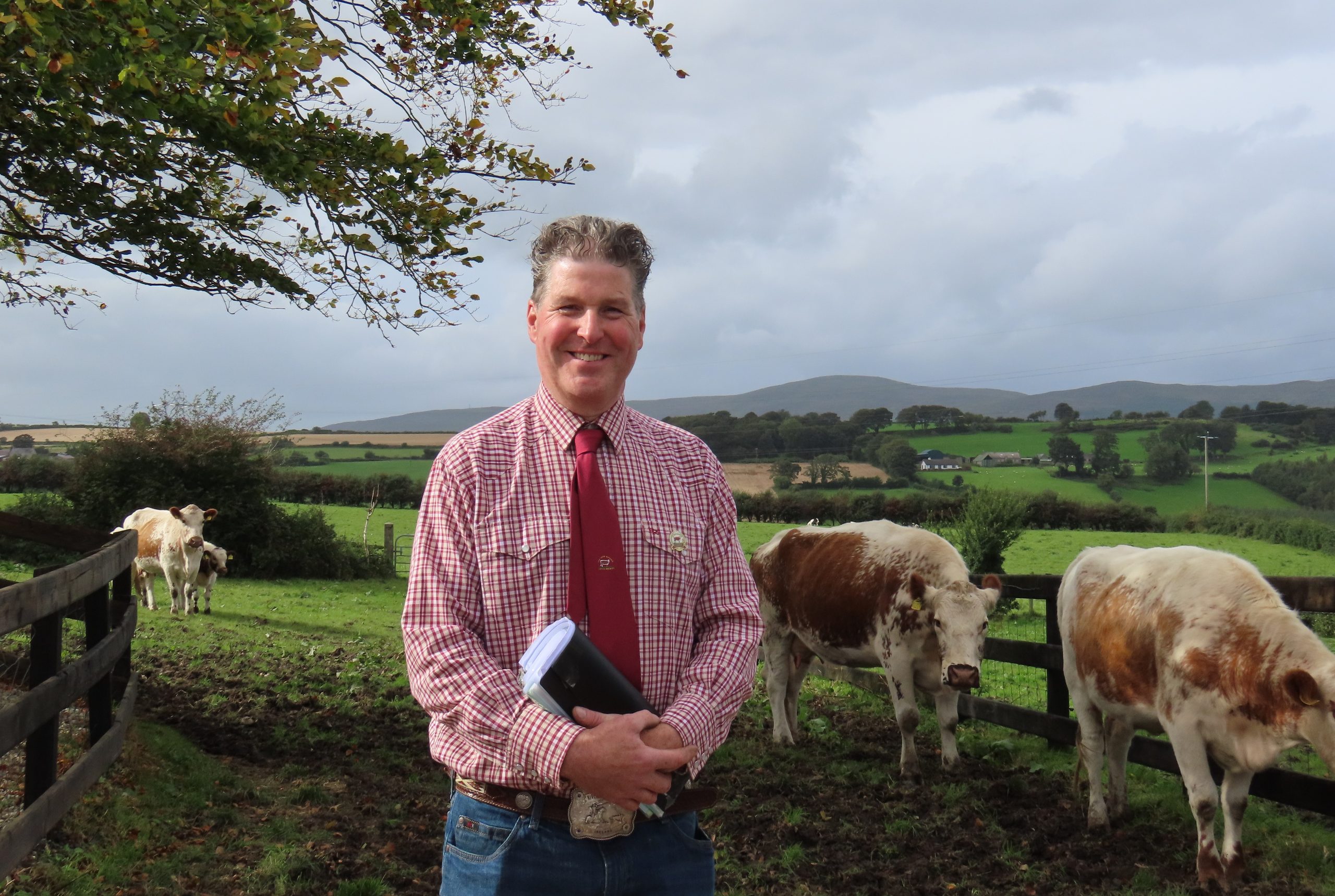
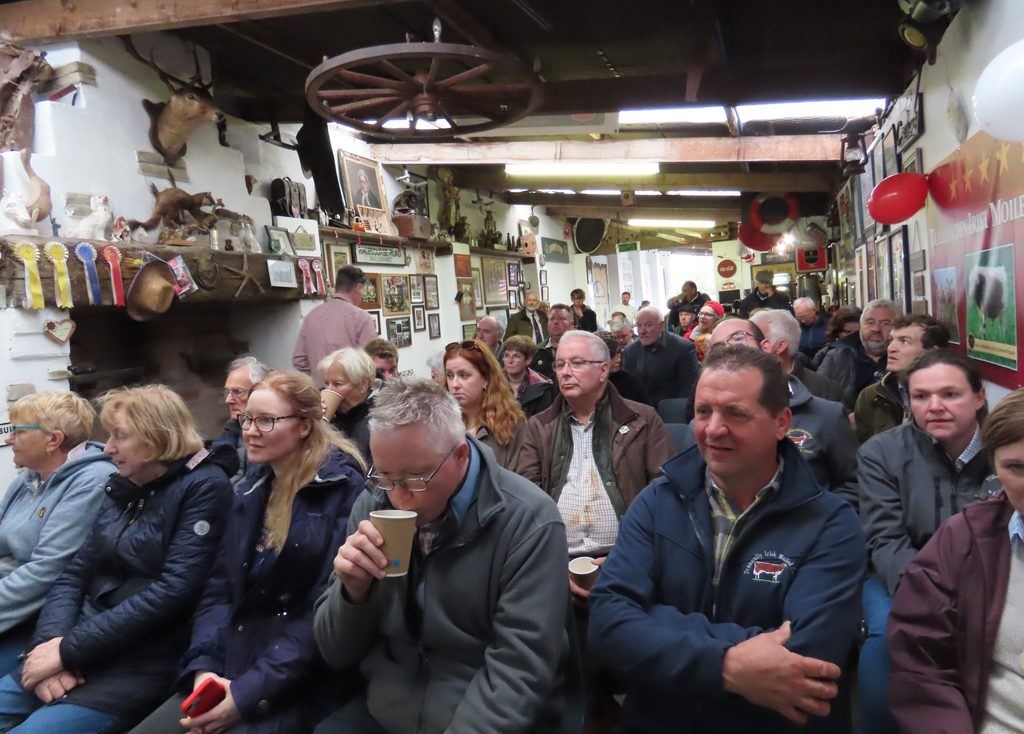
A huge crowd of Irish Moiled breeders and enthusiasts attended the recent Centenary Irish Moiled Breeders Day, held at the Tullyarden herd of pedigree Irish Moiled cattle owned by Dermot McGeady and family of Derry City, Co. Derry/Londonderry bringing together breeders, members and friends of the Society to celebrate an important milestone — 100 years of the Irish Moiled herdbook.
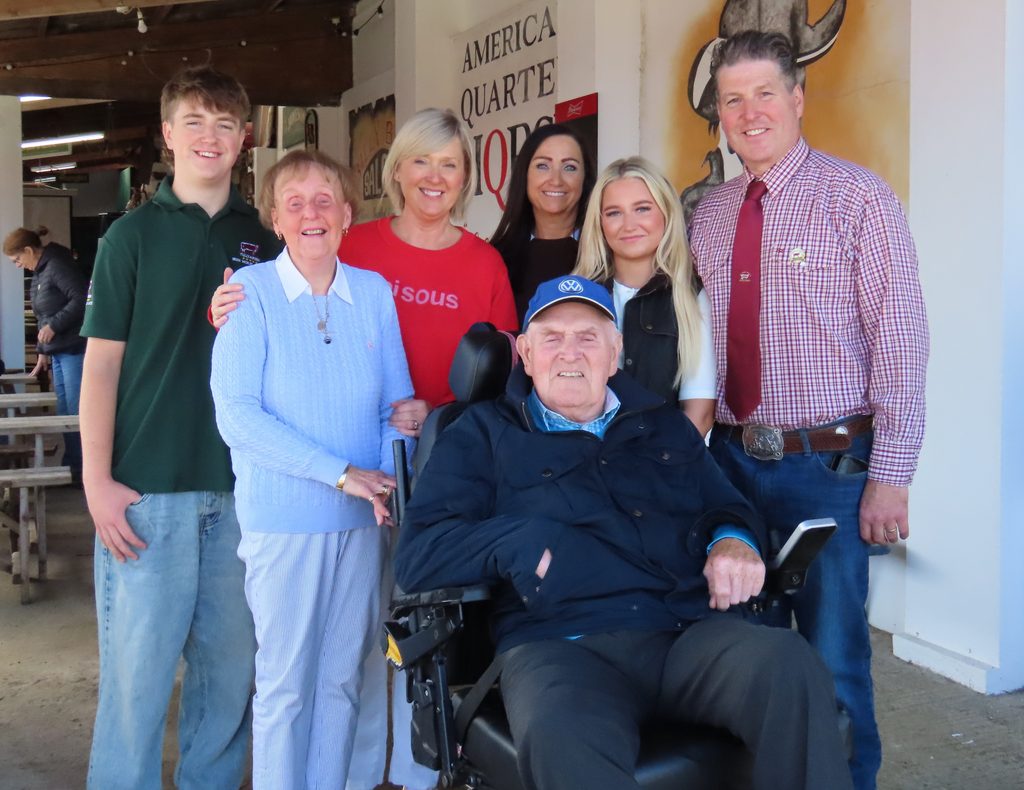
The setting could hardly have been more fitting. Guests were immediately amazed by Dermot’s postcard-perfect, American-themed home, built in the style of a traditional red barn. Yet alongside this American influence, Dermot has very much retained his Irish roots. Within one of the old buildings, he has created a fascinating museum filled with farming artefacts and reminders of rural life from years gone by. A beautiful open fire, complete with a basket of turf and kettle, recreates a scene that would have been familiar in an Irish farmhouse a century ago, when the fireside was the central gathering place for storytelling, music and conversation. Surrounded by old farming implements and tractors, it provided the perfect backdrop for a gathering marking such a significant anniversary for one of Ireland’s native cattle breeds.
The Centenary milestone also offered an opportunity to reflect on just how far the Irish Moiled breed has evolved. The last two remaining purebred Irish Moiled breeders based in N. Ireland in the late 1970’s, alongside the Rare Breeds Survival Trust, Liverpool University and a small core of new dedicated breeders, fought to save the breed from near extinction, would all surely be proud to see the breed’s prominence today. Their efforts, combined with the Irish Moiled Cattle Society and the continued dedication of many new Irish Moiled breeders, have helped secure a future for the breed, with registrations now reaching record numbers on an annual basis.
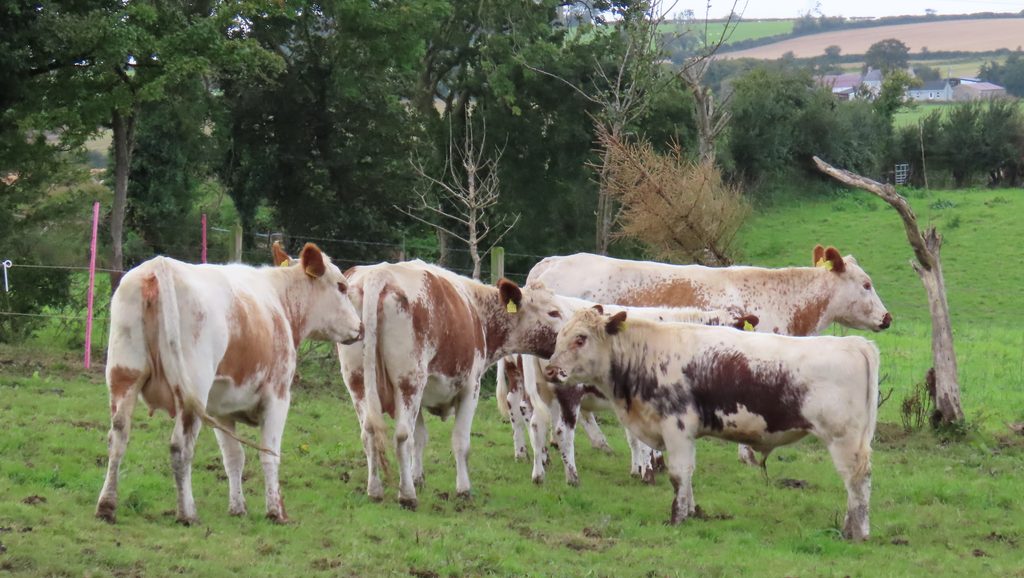
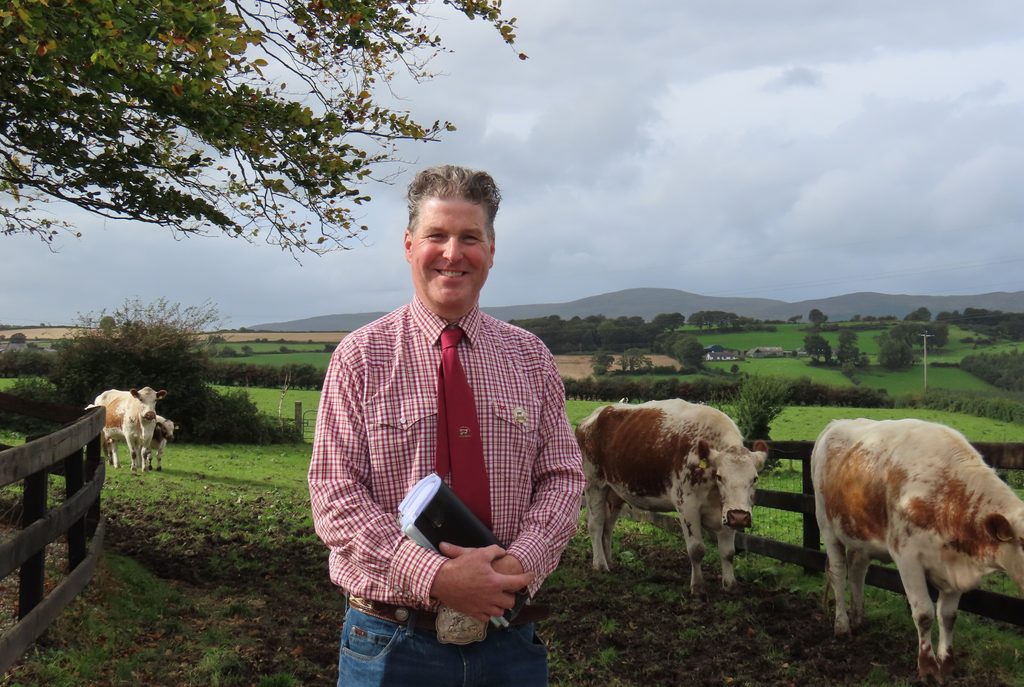
In many ways, the Irish Moiled breed remains just as recognisable today as it was 100 years ago: a medium-sized, naturally polled animal with distinctive markings, a characteristic white line running along its back and a mottled face. An Irish and UK native breed, it is well suited to our wet and cold winters and is remarkably resourceful, readily grazing rough grass, weeds and briars. Its medium size and light-footed nature also make the Irish Moiled particularly suitable for softer/wetter ground and conservation grazing, where the cattle can help control scrub and create conditions in which wildflowers and other plant life can flourish. This ability to combine traditional farming qualities with a role in modern conservation was a theme that was discussed throughout the day. High on the hills overlooking the rolling countryside on the outskirts of Derry/Londonderry, close to the County Donegal border, Dermot’s Tullyarden herd looked completely at home in its picturesque surroundings. The cattle are rotationally grazed throughout the summer months and outwintered on paddocks and fed silage and licks.
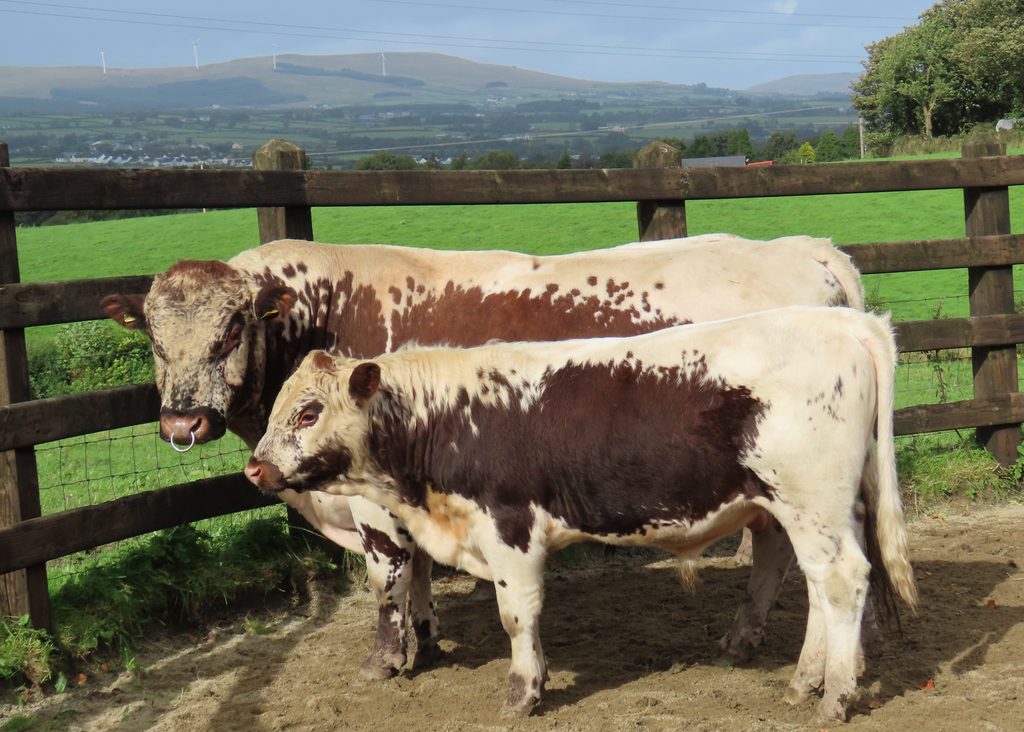
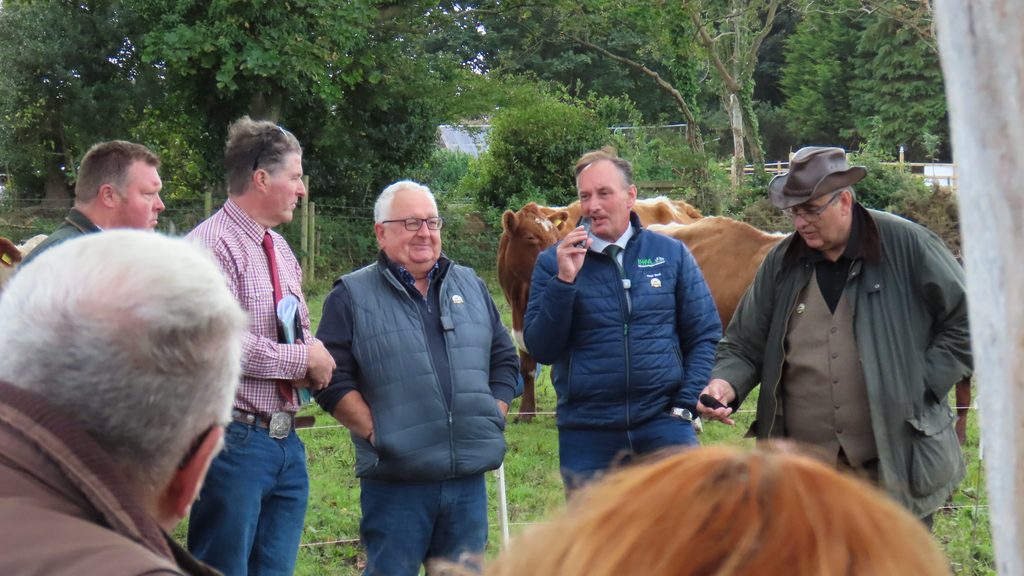
The Society invited several of its leading breeders and directors, together with Paul Boal from Irish Holstein-Friesian Association, to speak on important areas including linear classification scoring, weight recording and genetic star ratings. The Tullyarden cattle provided a practical focus for these discussions. The cattle were divided into four groups, taking all those who attended the day on a journey through the development of the herd, beginning with the first paddock of Irish Moiled cattle obtained by Dermot in 2019, including Ardert Imelda (Grade A) one of the foundation cows at the ripe old age of 15 years old and progressing through to the fourth paddock, where the herd’s senior stock bull Dring Chulainnwas running alongside, the superb young cow and bull calf outfit, Tullyarden Saoirse and Tullyarden Bridger. Bridger is a particularly impressive bull calf, weighing 270kg at 7 months old (50% of his mother’s weight) and displayed many of the trait’s breeders hope to pass on to future generations of cattle breeding. From those original foundation animals to the younger animals being bred in the herd today, the Irish Moiled breeding policy at Tullyarden is making a very strong impact.
From Tullyarden, the day continued with an extra-special visit to the historic 18th-century Brookhall Estate. Guests walked through the estate and along the River Foyle with Professor John Gilliland, who gave a warm welcome and shared the fascinating history of Brookhall and its walled garden.
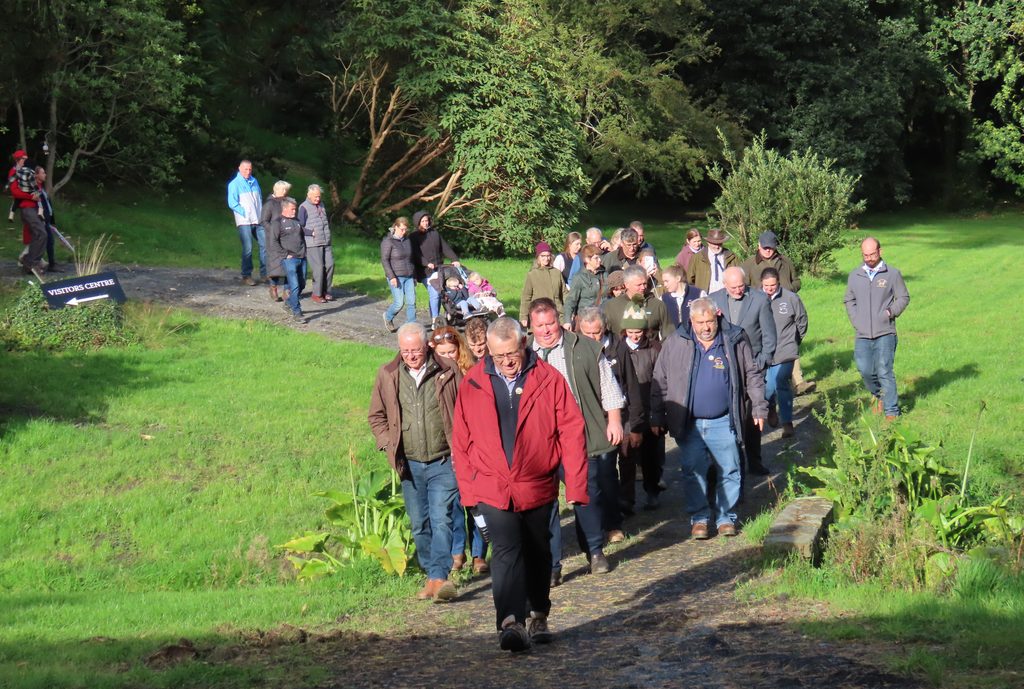
The visit also provided an intriguing insight into the relationship between livestock, soil health and the natural environment. Professor Gilliland explained some of the experiments carried out to assess the health of the soil’s natural ecosystem. Interestingly, testing in areas dominated by large, old oak trees indicated that the soil ecosystem there was performing poorly.
One of the factors identified was the absence of grazing. Where cattle graze, their dung acts as a natural slow-release fertiliser, returning essential nutrients to the ground, improving soil structure and supporting beneficial microbial life. As the dung breaks down, it also attracts insects such as dung beetles, whose tunnelling helps naturally aerate compacted soil. It brought the earlier discussion about the Irish Moiled’s suitability for conservation grazing neatly into focus. This year, Brookhall Estate intends to graze Irish Moiled cattle within its oak and wooded areas, taking advantage of the breed’s light-footed nature and ability to browse and clear scrub. Further soil testing should provide an interesting opportunity to observe what effect their introduction has on the soil structure and wider ecosystem.
As the afternoon gave way to the evening, the focus shifted from how Irish Moiled cattle can benefit the land to another of the breed’s qualities, its perfect flavoured beef.
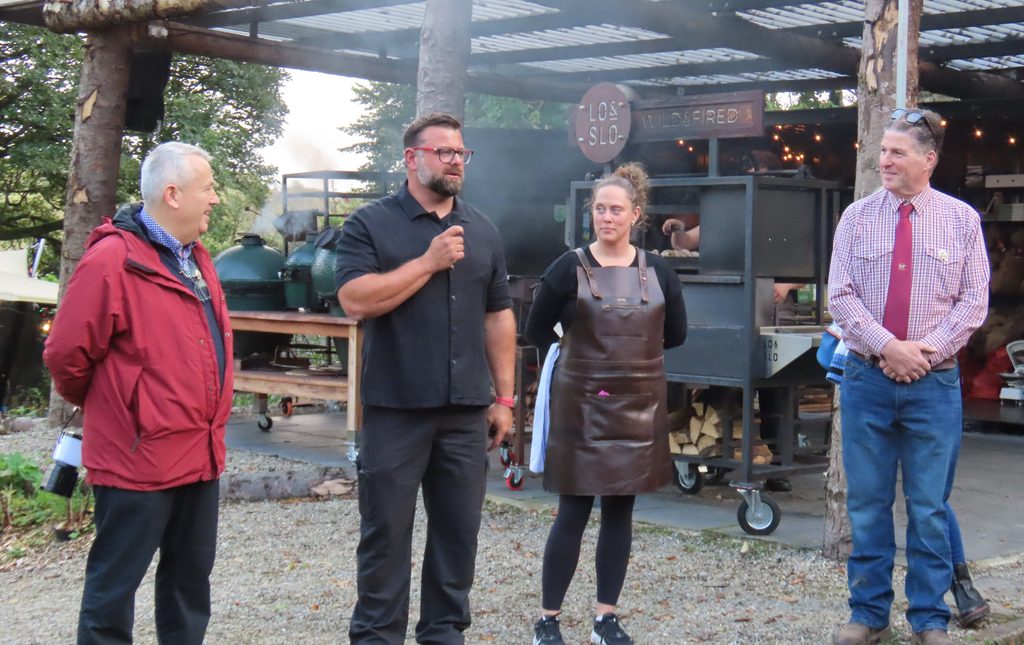
Norman and Emily McCorkell, the award-winning team behind Wild & Fired (Lo & Slo) BBQ Cookery School, shared the story of how their live-fire cookery school and dining experience came to be established within the historic walled gardens of Brookhall Estate. Once again, the day found a natural meeting point between traditional American barbecue techniques and local Irish heritage.
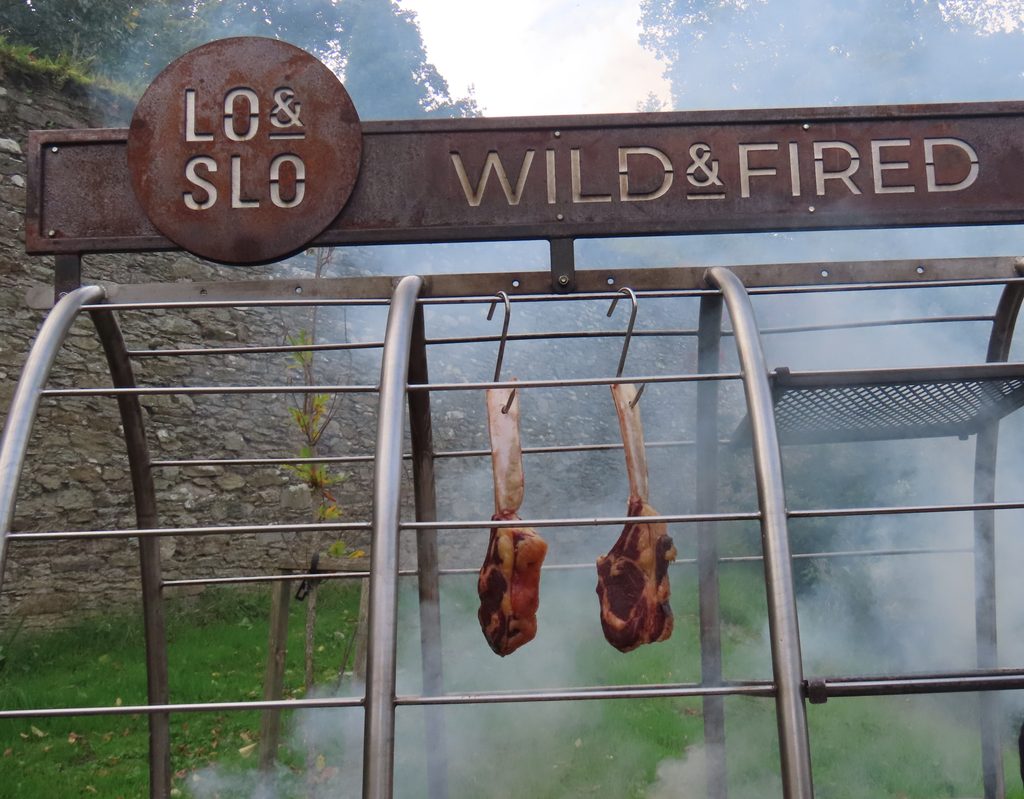
The relationship with Irish Moilie beef and Wild & Fired (Lo & Slo) BBQ Cookery School began almost by chance following a meeting between Norman and Dermot in a local hardware store. Conversation turned to the BBQ school and, after asking where Norman sourced his meat, Dermot explained the work of breeders participating in the Irish Moilie beef scheme. The beef offers full traceability from 100% registered pedigree Irish Moiled cattle, backed by mandatory DNA parentage testing. Through cooking the beef over fire, Norman has come to appreciate the flavour and marbling of the breed. Just as importantly, the story behind the cattle appealed to what he wanted to achieve at the cookery school — using naturally produced, grass-fed beef while giving diners an opportunity to learn about the breed and where their food comes from.
And after a day spent hearing about the history, genetics, conservation qualities and future of the Irish Moiled, there could hardly have been a more appropriate ending than getting to taste the finished product.
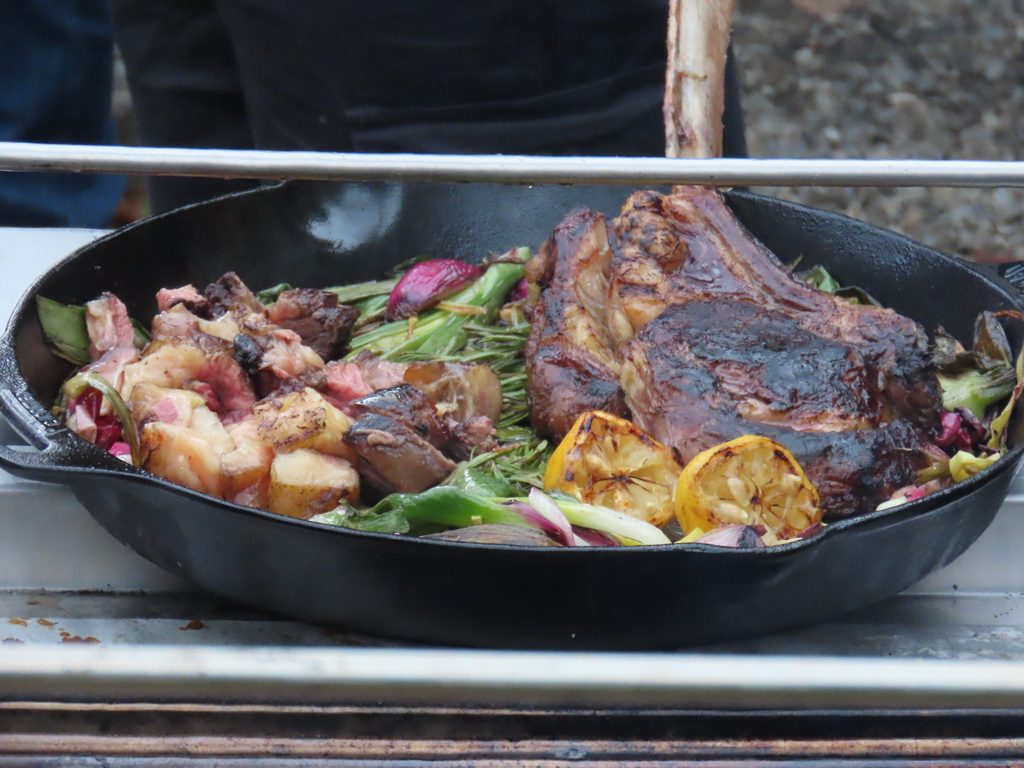
Outdoors in the tranquil surroundings of a walled garden in Brookhall estate, guests watched as Norman and Emily cooked Irish Moilie beef over the open fire. Using some of the best locally sourced ingredients, the meat was handled with pride and showcased as the specialist product it is. First came the show-stopping Irish Moiled Tomahawk steaks supplied by Moyletra Irish Moileds, followed by mouth-watering brisket and Irish Moiled burgers among the dishes on offer. It was an unforgettable food experience and a fitting finale to a day that had celebrated so many different aspects of this remarkable native breed.
As evening continued, members and breeders had the opportunity to network, catch up with old friends and celebrate together — marking not simply a successful Breeders Day, but a century of the Irish Moiled herdbook and the generations of breeders who have helped ensure its survival.
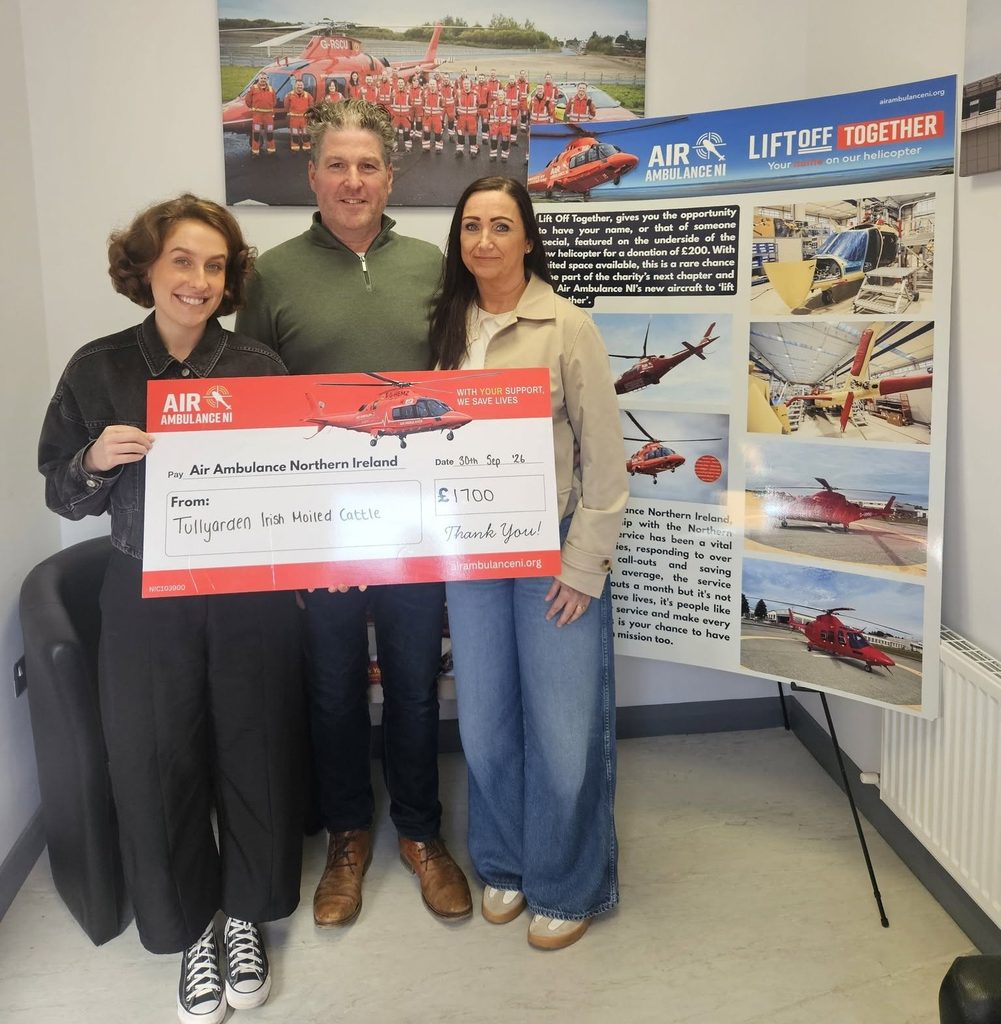
The generosity of those attending was also evident, with a collection held during the day in aid of Air Ambulance Northern Ireland. Dermot and his wife later presented a cheque for £1,700, adding another special element to the occasion.
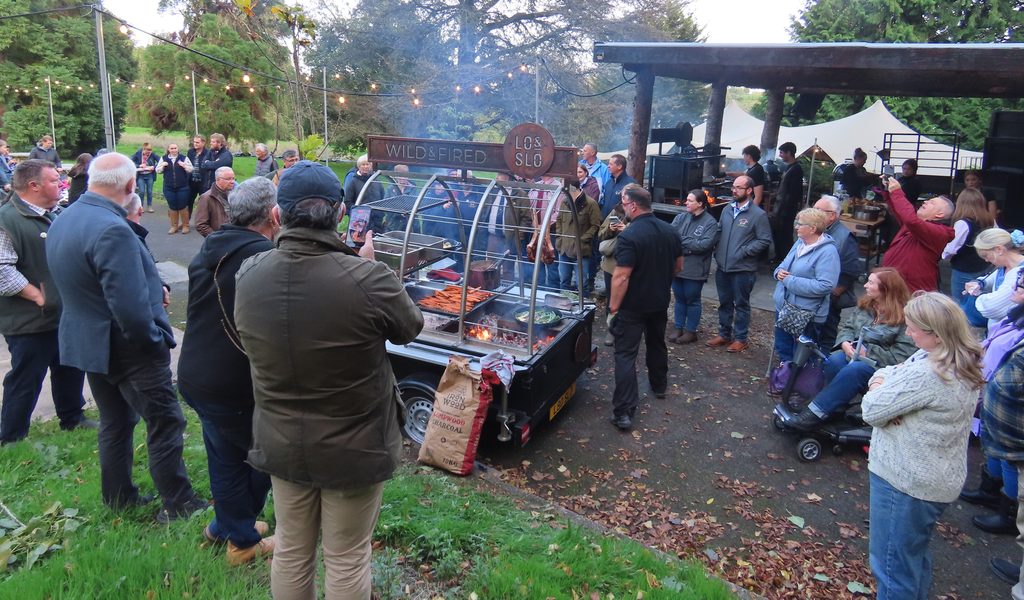
The Irish Moiled Cattle Society would like to thank everyone involved who made this Centenary Irish Moiled Cattle Society breeders day successful.
LATE REGISTRATION FEE WAIVERED
Also to commemorate the Centenary, just for the year of 2026, the Irish Moiled Cattle Society have waivered their late registration fee for animals that are overdue registration, this will end on 31st December 2026, so any breeders a little behind in their registrations, please avail of this one-time offer to get their registrations caught up, full details can be found on the Irish Moiled Cattle Society website.